21 July 2026
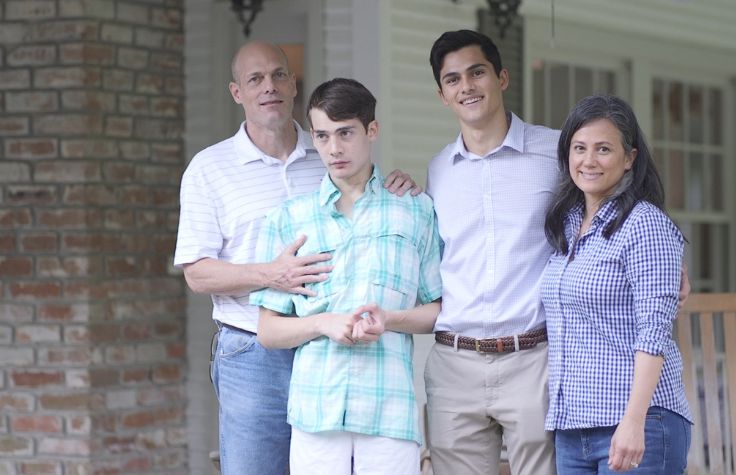
When Geraldine Bliss looks back on her son Charles’s early years, she remembers a child who seemed healthy and met many of his developmental milestones. Still, over time, she began noticing subtle delays and differences.
“Closer to about a year, I was recognizing some delays in speech,” Bliss says.
Over the next several years, Charles received speech therapy and was eventually diagnosed with autism. But Bliss felt there was more to the story. She visited pediatricians, therapists, and other experts before they led her to a neurologist specializing in metabolic disorders and a geneticist. When Charles was about six years old, a newly available genetic test—chromosomal microarray analysis—finally revealed the answer.
“A few months later, the geneticist called us back and said, ‘Guess what? We found something,’” Bliss recalls. “Chromosomal microarray really, truly enabled us to have a genetic diagnosis when nothing else really would have at that time.”
The test identified a small deletion at the end of chromosome 22 involving the SHANK3 gene, leading to a diagnosis of Phelan-McDermid syndrome, a rare genetic condition associated with developmental delays, autism, epilepsy, and other neurological challenges.
That diagnosis transformed the trajectory of Charles’s care—and ultimately changed the course of Bliss’s life.
Today, she is the co-founder and board chair of CureSHANK, a nonprofit focused on accelerating treatments for Phelan-McDermid syndrome and related SHANK disorders. She also helped launch Start Genetic, a public awareness campaign designed to encourage families to pursue genetic testing earlier in their diagnostic journeys.
For Bliss, the message is simple: genetic testing may provide answers that families need sooner.
“It is so empowering to have that knowledge from a genetic diagnosis,” she says. “It changes everything.”
More than a diagnosis
Bliss points to four major benefits of obtaining a genetic diagnosis.
First, it can help guide clinical care. For some genetic conditions, specific medications may be more effective—or should be avoided altogether.
Second, it connects families to communities that understand their experiences. Those communities often provide practical guidance that may not be available elsewhere.
“There’s this whole set of knowledge that’s in the patient community,” Bliss says. “And then there’s this whole emotional support that comes with knowing you’re not alone.”
Third, a diagnosis can open the door to precision medicine and clinical trials. CureSHANK is now helping support efforts to develop therapies targeting the underlying genetic cause of Phelan-McDermid syndrome.
“We’re now in our very first clinical trial of a gene replacement therapy for Phelan-McDermid syndrome,” Bliss says. “It’s extremely exciting.”
Finally, genetic diagnoses help advance research itself.
“Once you have that genetic diagnosis and you’re connected with the community, there are often many research opportunities,” she says. “Families can really be empowered to take part in and help shape the future of their disease.”
Why timing matters
Newer technologies, such as whole-genome and whole-exome sequencing, can help families get answers sooner. Recent guidance from organizations like the American Academy of Pediatrics is also evolving to make access to these advanced genetic tests easier.
Although genetic testing is increasingly recommended for children with developmental delays or autism, many families still experience years-long diagnostic journeys.
According to Bliss, some individuals with Phelan-McDermid syndrome are not diagnosed until adulthood because they remain categorized under broader diagnoses such as autism.
“It shouldn’t be that way,” she says.
The consequences can be significant. Families may spend years pursuing therapies, medications, and interventions without understanding the underlying genetic cause.
“They’re putting themselves through more heartbreak and they’re putting their kids through difficult things because they don’t have the information that could potentially change everything,” Bliss says.
Early diagnosis may also become increasingly important as more precision medicines enter clinical development. Some clinical trials recruit younger patients, meaning delays in testing can affect eligibility.
“It really does underscore the importance of getting more kids tested at a young age and of accelerating that whole process,” Bliss says.
A call to action on July 25
Through Start Genetic, Bliss is excited to raise awareness about genetic testing and encourage families to ask a simple question: Could this be genetic?
The Start Genetic initiative includes educational resources for families, healthcare providers, and advocates—including a parent toolkit designed to help families navigate conversations with clinicians and advocate for appropriate testing.
On July 25, Start Genetic will lead Genetic Testing Action Day, an awareness effort intended to amplify stories from patients, families, and advocacy organizations across disease communities.
“We’re all going to lift our voices that day and do our best to spread the gospel about testing,” Bliss says.
She hopes supporters will follow Start Genetic on social media, share educational content, and help normalize conversations about genetic testing.
“By sharing our stories, we hope those messages will be seen,” Bliss says. “We want to condition people to think of genetic testing as a very normal thing.”
In addition to sponsoring the campaign, Illumina is working alongside Start Genetic to raise awareness of genetic testing, engage patient advocacy organizations, and amplify the campaign’s reach.
For Bliss, the ultimate goal is larger than any one disease community. Every additional diagnosis contributes to a growing body of knowledge that can support research, clinical trials, and future therapies.
“We’re hopeful that each year it grows and grows and we can see a bigger impact,” she says. “We’re hoping we start seeing the results in terms of growing rare disease communities and more patients getting a diagnosis.”
Geraldine Bliss is a patient advocate. The Illumina Global Patient Advocacy team works with patients, families, carers, and the groups that represent them to build evidence and advocate for the positive impact of genomics utilization. Patient advocates may be compensated for their time when sharing their stories. Their stories are a testimonial of the potential impacts and benefits genomics can have on rare diseases. One person’s experience is not predictive of results in all cases, which may differ based on a variety of factors. Results in other cases may vary.
Learn more at StartGenetic.org.