Streamline your lab operations
Discover how the NovaSeq X Series provides a new standard in operational simplicity, driving breakthroughs and maximizing productivity.
Bringing valuable insights to light with the latest advances in Illumina high-throughput next-generation sequencing technology

The latest innovations in Illumina high-throughput next-generation sequencing technology power advanced applications to generate dramatically more data for more impactful insights. Increasingly, scientists are leveraging the advantages of advanced next-generation sequencing (NGS) applications with our simplified, cost-efficient high-throughput sequencing workflows.
The latest advances in Illumina sequencing have enabled high-throughput sequencing applications, bringing insights that were unimaginable even a few years ago and removing barriers with every technological innovation.
Get an unparalleled breadth of targets. Create multidimensional insights with optimized indexing strategies. Illumina high-throughput sequencing provides a single robust readout for multiple -omes.
Amplify your insights. Cast a wider net with larger sample sizes. Cost-effective high-throughput sequencing opens up your options for sequencing applications and allows additional insights for a more comprehensive view of your sample.
Explore the technologies pushing the frontiers of NGS-based research with simpler workflows, greater discovery power, and new possibilities.

Combine genomic data with data from other modalities such as transcriptomics, epigenetics, and proteomics to measure gene expression, gene activation, and protein levels. High-throughput omics profiling studies enable a more comprehensive understanding of molecular changes contributing to normal development, cellular response, and disease.
Achieve impactful insights and accelerate your lab’s work with these methods. Explore a wide variety of high-throughput NGS research methods and their key benefits.
This method delivers a high-resolution view of the entire genome, ideal for discovery applications.
This approach involves sequencing the protein-coding regions of the genome to uncover genetic influences on disease and population health.
Proximity mapped read technology
This technology can help researchers resolve challenging genomic regions, detect complex structural variants, and perform de novo genome assembly.
Methylation sequencing approaches provide insight into cytosine methylation patterns at a single nucleotide level.
Genome and methylome sequencing
This method simultaneously detects genetic variants and DNA methylation from a single sample, providing integrated genomic and epigenomic insights in one streamlined assay.
Cellular indexing of transcriptomes and epitopes (CITE-Seq)
This method simultaneously quantifies gene expression and surface protein expression levels at single-cell resolution.
This method involves sequencing both coding RNA and multiple forms of noncoding RNA for a comprehensive view of the transcriptome.
This method maps gene expression using intact tissue to connect molecular activity with tissue structure for a better understanding of complex biological interactions.
This approach uses sensitive single-cell and ultra-low–input RNA-Seq methods to reveal gene expression patterns and cell-to-cell variation often masked by bulk analysis.
This method combines high-sensitivity protein detection with the scalability and throughput of NGS to quantify thousands of proteins.
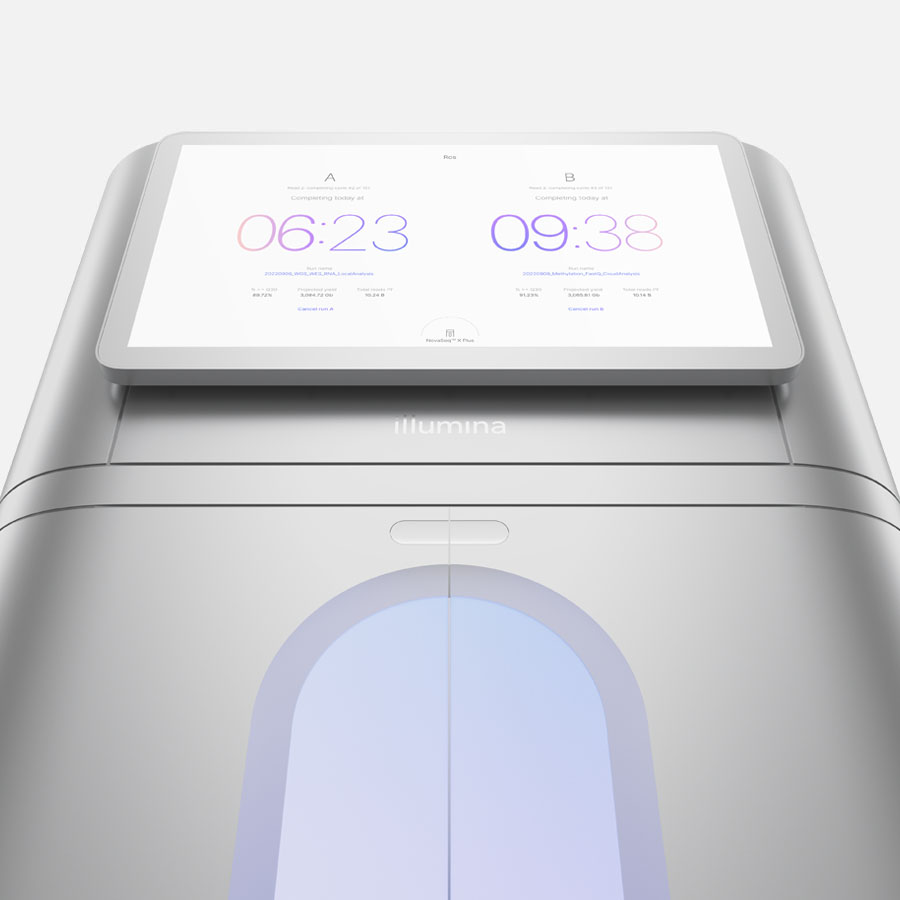
Unleash your ambitions with the NovaSeq X and NovaSeq X Plus Sequencing Systems, our most powerful and most sustainable sequencers yet. The ultra-high–throughput NovaSeq X Plus System delivers up to 16 Tb output and 52 billion single reads per dual flow cell run. Advanced chemistry, optics, and informatics provide exceptional accuracy and speed that enable transformative economics for groundbreaking discoveries.
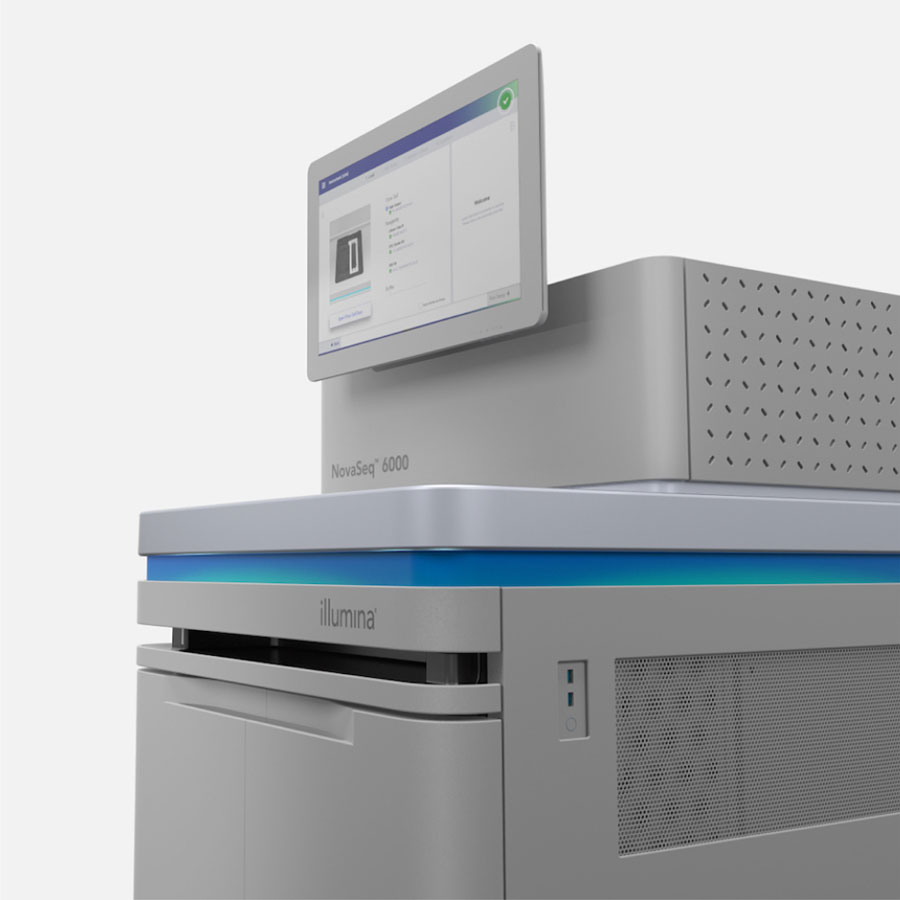
A tried-and-true high-throughput instrument with improved economics and an output of up to 6 Tb and 20 billion single reads in < 2 days. Unlock a full spectrum of genetic variation and biological function with high-throughput sequencing on the NovaSeq 6000 System. Advances in reagents support a vast breadth of targets and complex indexing strategies.
Unleash your ambitions with the NovaSeq X and NovaSeq X Plus Sequencing Systems, our most powerful and most sustainable sequencers yet. The ultra-high–throughput NovaSeq X Plus System delivers up to 16 Tb output and 52 billion single reads per dual flow cell run. Advanced chemistry, optics, and informatics provide exceptional accuracy and speed that enable transformative economics for groundbreaking discoveries.

This software provides ultra-rapid secondary genomic analysis with highly accurate results, diverse applications, and frequent updates. DRAGEN software can process NGS data for an entire human genome at 30× coverage in about 25 minutes.
This software is a secure, cloud-based platform for managing genomic data and analysis. Automate pipelines, run DRAGEN and custom workflows, and scale from pilot studies to population-level programs.
Streamline your lab operations
Discover how the NovaSeq X Series provides a new standard in operational simplicity, driving breakthroughs and maximizing productivity.
Find out how to simplify the informatics infrastructure and data analysis pipeline setup process and access more data for more insights.
Understand how to pool and sequence large numbers of NGS libraries simultaneously during a single run.
Supporting genome center growth
Read how the Deakin Genomics Centre uses Illumina NGS for high-throughput sequencing projects to lower sequencing costs and provide a faster sequencing data turnaround time.
Identifying breast cancer targets
Learn how the Garvan Institute scientists use Illumina high-throughput NGS to sequence more than a million breast cancer cells to help create a comprehensive cellular atlas of breast cancer.
Learn how these walk-away automation methods for Illumina kits eliminate the need to develop your own method and can help you reduce hands-on time and minimize errors.
Scale sequencing with greater efficiency
Watch how a core lab uses the latest NovaSeq X Series innovations to streamline high-throughput sequencing workflows, optimize output, and rapidly deliver high-quality data.
NGS-based proteomics analysis MiniBootcamp
Follow a practical proteomics workflow from data QC and normalization through statistical analysis and biological interpretation.
Decoding early synaptic failure through multiomics
See how integrated mRNA and miRNA analysis can uncover regulatory signals, pathways, and biological insights into synaptic dysfunction in Alzheimer’s disease.
Consider your research goals, application, sample number, read length, sequencing depth, and required data output. Planning these factors together can help you select an appropriate sequencing strategy and make efficient use of available sequencing capacity. Illumina provides NGS experimental design and planning resources to help evaluate considerations such as read length, coverage, and sequencing quality.
Sequencing throughput is the total amount of sequencing data a system can generate, while sequencing depth describes how many times a particular base or region is sequenced. Higher throughput can support more samples, greater sequencing depth, or a combination of both, depending on the study design. Learn more about sequencing depth.
High-throughput sequencing can support increasing sample numbers while providing the sequencing capacity needed for data-intensive applications. Multiplex sequencing can further increase sample throughput by allowing uniquely indexed libraries to be pooled and sequenced together in the same run.
Maintaining data quality as studies scale starts with careful experimental design and consistent workflows across library preparation, sequencing, and data analysis. Evaluating factors such as sequencing quality scores, read length, and coverage can help researchers design experiments that meet their data quality requirements. Illumina provides experimental planning guidance covering each of these considerations
Moving to high-throughput sequencing may be appropriate when using increasing sample volumes, greater sequencing depth, or data-intensive applications begin to exceed the practical capacity of a benchtop workflow. Consider current project requirements and anticipated growth when evaluating the throughput and scalability your lab needs. Compare Illumina sequencing platforms to find a system that aligns with your research needs.
Interested in the latest high-throughput sequencer? Don’t let your budget hold you back. Explore different buying options to find which best fits your needs.
Everything you need at a glance
Get additional training, find software, plan experiments, purchase, and get support.
Talk to an expert about implementing high-throughput sequencing to do more in your lab.