Innovative Illumina sequencing platforms
Our innovative platforms deliver exceptional data quality and accuracy at a massive scale. View sequencer comparison tables and find tools designed to help you choose the right platform for your needs.
Combine next-generation sequencing methods for a deeper understanding of cancer

NGS-based cancer sequencing methods have expanded our understanding of cancer development, regulation, and progression to unlock new pathways for research. These techniques help detect changes in the cancer genome and identify their impact on the transcriptome, epigenome, and proteome.
Unlike other methods, such as PCR and Sanger sequencing, NGS has the ability to assess thousands of targets at once, greatly amplifying the discovery potential per sample. NGS can also detect low-frequency molecular events associated with carcinogenesis, cancer growth, and metastasis that could be missed using traditional molecular methods. Together, advancements in NGS-based cancer sequencing methods are paving the future towards improving translational medicine and therapies.
Researchers can leverage several approaches when studying biological “omes”: bulk-cell analysis, single-cell analysis, spatial analysis, and metagenomic analysis. Each method studies cancer at a different level of biological resolution and has a distinct use case depending on the research goals and objectives.
Bulk-cell analysis allows scientists to study pooled cell populations, tissue sections, or biopsies.
Single-cell analysis studies a given “ome” at the resolution of a single cell.
Spatial analysis captures “omic” information at the cellular level within an intact tissue sample to link structure and activity.
Metagenomic analysis sequences every gene in every organism of a complex microbial community present within a tissue, organ, or tumor.
Multiomics (multiple omics) integrates data across genomics, transcriptomics, epigenetics, and proteomics to make insights into complex diseases such as cancer. This comprehensive approach aids researchers in understanding molecular changes driving normal development, cellular responses, and diseases.
Both targeted and untargeted approaches play crucial roles in cancer research. Targeted studies contain some bias since specific, preconceived pathways and targets are assessed. Although this approach may be more efficient and cost-effective in limited cases, untargeted approaches can maximize novel discoveries as they are not dependent on prior knowledge of sequence information. To achieve untargeted sequencing, NGS offers a comprehensive selection of methods to analyze complex cancer samples.

Method |
Description and use |
| Genomics | |
| Cancer whole-genome sequencing | Identifies a comprehensive list of cancer-driving genetic events |
| Cancer whole-exome sequencing | Identifies cancer-driving genes within the coding region of the genome and is a cost-effective and efficient sequencing method to compared to whole-genome sequencing |
| ctDNA sequencing | Detects cell-free circulating tumor DNA (ctDNA), which can act as a noninvasive cancer biomarker and is used as a potential alternative to invasive tissue biopsies |
| Targeted NGS cancer panels | Targets known DNA and/or RNA variants from the same FFPE sample |
| Epigenomics | |
| Methylome sequencing | Provides insight into methylation patterns at the single nucleotide level for both genome-wide analysis and targeted approaches |
| Cancer epigenetics | Identifies cellular biomarkers associated with regulation of cancer genes or drug resistance |
| Assay for transposase-accessible chromatin with sequencing (ATAC-Seq) | Determines chromatin accessibility across the genome without prior knowledge of regulatory elements |
| Transcriptomics | |
| Cancer RNA-Seq | Measures the average RNA expression and transcriptome changes in cancer samples |
| Spatial transcriptomics | Analyzes gene expression within the natural tumor microenvironment and intact tissue architecture |
| Single-cell RNA-Seq | Measures gene expression and explores the distinct biology of individual cancer cells in complex tissues |
| Proteomics + Transcriptomics | |
| Cellular indexing of transcriptomes and epitopes (CITE-Seq) | Uses oligonucleotide-labeled antibodies to measure proteins and RNA simultaneously in single cells. This combined proteomics plus transcriptomics approach links RNA expression to cancer phenotypes |
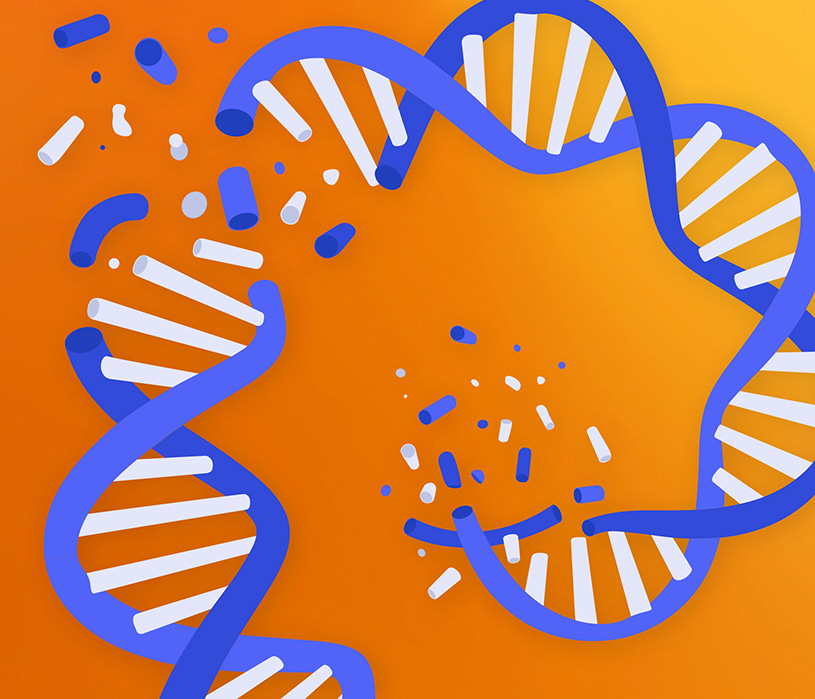
The cancer research methods guide is a 40+ page resource with simple, comprehensive workflows for a broad range of cancer research applications. This guide discusses single-cell sequencing, spatial sequencing, methylation profiling, multiomics, cell-free RNA sequencing, and more.

Learn about specific cancer research applications and explore resources covering research developments, guides, products, and more.
Innovative Illumina sequencing platforms
Our innovative platforms deliver exceptional data quality and accuracy at a massive scale. View sequencer comparison tables and find tools designed to help you choose the right platform for your needs.
Comprehensive cancer research products
View NGS and microarray products supporting multiple cancer research applications, including tools for analyzing DNA, RNA, epigenetics, and more.
Intuitive sequencing data analysis
User-friendly Illumina tools ease the process of analyzing sequencing data so you can spend more time doing research and less time configuring workflows.
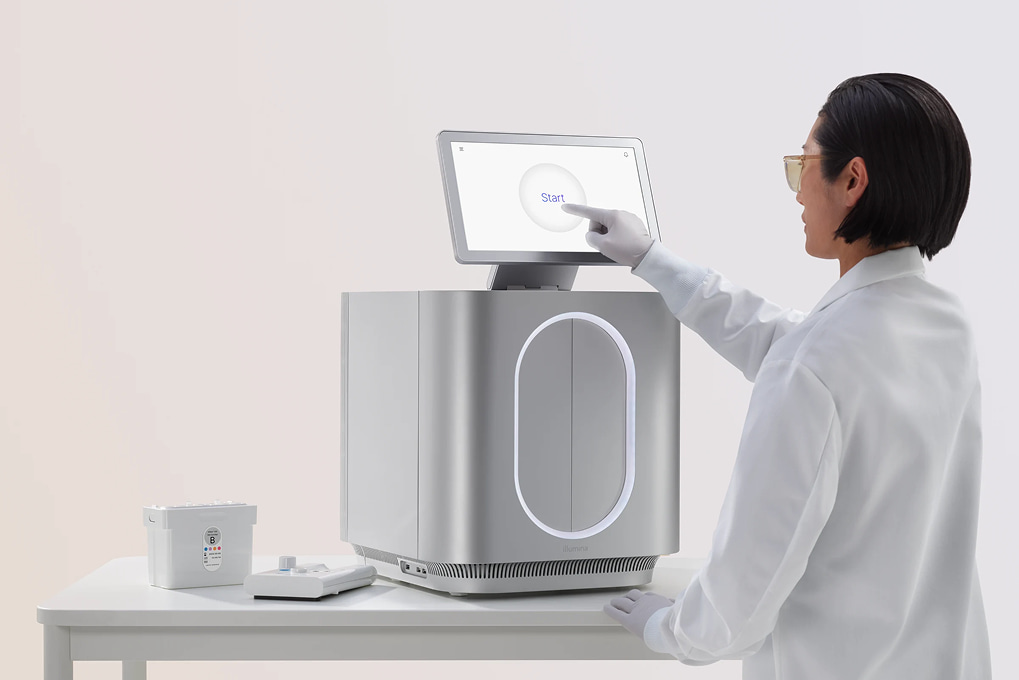
Interrogate a focused selection of genes associated with specific cancer types or pathways using the fastest, simplest Illumina benchtop sequencer.
Multiomics methods guide
This Methods Guide provides examples of multiomic research from recent literature and detailed, end-to-end workflows. Includes recommendations for sample isolation, library prep, sequencing depth, data analysis, and more.
Liquid Biopsy methods guide
This 20+ page eBook provides published, comprehensive workflows to thoroughly characterize liquid biopsy samples using NGS and microarrays.
Redefining NGS in cancer research
In this webinar, experts cover topics in NGS as well as challenges and achievements in cancer research. They also detail how multiomics can be used to improve insights into this complex disease.
Advancing cancer research with multiomics
Learn how researchers at the Ontario Institute for Cancer Research and United Health Network are linking the causes and consequences of complex phenotypes through multiomics to enable discoveries that weren’t possible before.
Learn the basics of next-generation sequencing and find tips for getting started.
Simplify targeted oncology sequencing with Illumina and Pillar Biosciences
See how Pillar Biosciences panels and the MiSeq i100 accelerate oncology insights with a streamlined NGS workflow. This flyer highlights a ready-to-use solution delivering accurate variant detection in under 24 hours.
Interested in getting more information on cancer sequencing methods?