NovaSeq X Series applications and methods

Unimaginable experiments, made unbelievably cost-efficient

The NovaSeq X Series offers vast application breadth, enabling data-intensive methods at production scale

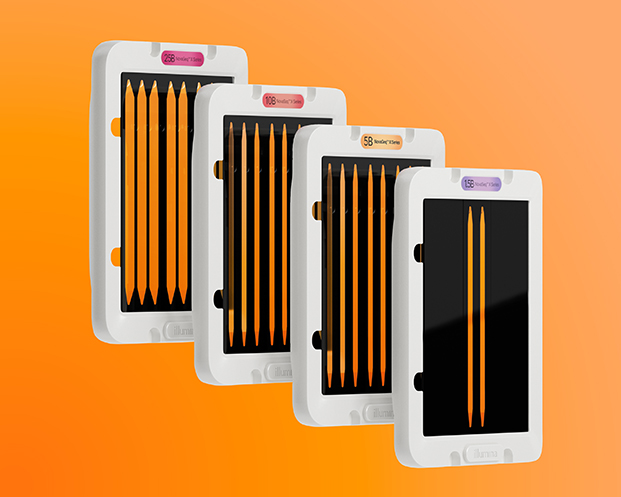
NovaSeq X flow cells

Key applications and methods

The unmatched combination of production-scale throughput and cost enables deeper sequencing of larger sample cohorts. The NovaSeq X Plus System delivers 16–21 Tb of output*, allowing sequencing of 128 human genomes at 30× coverage or 96 human genomes at 40× coverage per dual 25B flow cell run.

* Performance at the higher range of output specification is not guaranteed. Actual output is dependent on library type, sample type and run optimization.

1
Prep
2
Sequence
3
Analyze

Representing less than 2% of the genome, WES is a cost-effective alternative to WGS. The NovaSeq X Plus System offers sequencing of ~1500 exomes in a single run using a dual 25B flow cell run.

1
Prep
2
Sequence
3
Analyze

Analyze coding plus multiple forms of noncoding RNA for a comprehensive picture of the transcriptome. With the NovaSeq X Plus System, you can sequence over 1000 transcriptomes in a single run using a dual 25B flow cell run.

1
Prep
2
Sequence
3
Analyze

Unlock the next wave of genomic discovery

Increased discovery power will come from larger studies with deeper sequencing to identify rare genetic events, and broader sequencing methods and multiomics for a more comprehensive view of cellular activity. Learn how the NovaSeq X Series makes it easy to transition to high-throughput and expand your application reach.

More applications and methods

Enhance epigenetic studies with high-coverage density and flexibility enabled by sequencing-based DNA methylation analysis.

Sequence thousands of organisms in parallel. Identify unculturable or low-abundance microbes, or evaluate microbial diversity.

Select and sequence polyadenylated transcripts for gene expression profiling studies.

Improve statistical power, get multidimensional insights, and increase analytical resolution with cost-efficient high-throughput sequencing workflows.

Genome-wide comparison of tumor vs matched normal DNA to inform analysis of oncogenes, tumor suppressors, and other risk factors.

Assess the individual contributions of single cells in complex tissues by profiling the transcriptome.

The assay for transposase-accessible chromatin with sequencing (ATAC-Seq) is a popular method for determining chromatin accessibility across the genome.

Chromatin immunoprecipitation sequencing (ChIP-Seq) is a powerful method for analyzing DNA-protein interactions and performing genome-wide surveys of gene regulation.

De novo sequencing refers to sequencing a novel genome with no reference sequence available. NGS enables fast, accurate characterization of any species.

Capture genomic regions of interest via hybridization to target-specific biotinylated probes.

A highly accurate approach that can help resolve challenging regions of the genome such as complex structural variants and highly repetitive elements.